










































Sarteneja

printer iconPrintemail iconEmailfavorites iconSave to Favorites

From the Maya “Tzaten-a-ha” or “give me the water,” Sarteneja was named after the 13 Maya wells found in the area, carved into limestone bedrock and providing potable water. In addition to being a picturesque fishing village, Sarteneja is the only place on mainland Belize where you can watch the sunset over the water.

The spot was first settled by the Maya as an important trading area. It is thought to have been occupied from 600 B.C. to A.D. 1200, and gold, copper, and shells continue to turn up in the area.

Mexican refugees from the Yucatán Caste Wars settled here in the mid-19th century, again attracted by the availability of drinking water. The village took a pounding from Hurricane Janet in 1955 but rebounded and became known for its boat builders and free-diving lobster and conch fishers.

Today, 80 percent of Sarteneja’s households remain reliant on the resources of the Belize Reef. Tourism is creeping in, and Sarteneja offers one of the more off-the-beaten-path experiences in the country. Located on Corozal Bay, it is a well-kept secret in Belize, and few tourists have heard about its breathtaking sunsets, sportfishing, and importance as a protected area for manatees and bird nesting colonies (in the Corozal Bay Wildlife Sanctuary).

It is also known for the annual regatta that takes place each Easter, with newly painted sailboats of the artisan fishing fleet, crewed by local fishers, racing against each other in a tradition that has continued since 1950.

Master boat builders Juan Guerrero and Jacobo Verde handcraft traditional wooden vessels at their workshops in Sarteneja. During fishing season, these boats dock in Belize City, by the Swing Bridge.

With access to nearby Maya sites and ties to the barrier reef at Bacalar Chico, Sarteneja has a lot to offer the adventurous tourist in search of the real Belize. The community is aware of its resources, and community groups have joined forces to form the Sarteneja Alliance for Conservation and Development, which co-manages Corozal Bay Wildife Sanctuary. Local fishers, now trained as tour guides, offer a number of guided tours—both marine and inland.

Sarteneja is also the location of the Manatee Rehabilitation Centre, run by Wildtracks, a local NGO, which takes in and rehabilitates orphan manatee calves as part of a national program to protect this threatened species. The center isn’t open to visitors unless by special arrangement—check with the Sarteneja Tour Guide Association (www.sartenejatours.com, tel. 501/669-4911) for details; their office is on the seafront. They can also help visitors find licensed local tour guides. The region can get pretty buggy, so take precautions.

Hotels

There are 13 participating families in the Sarteneja Homestay program (tel. 501/669-3020 or 501/662-6860, sartenejahomestay [at] gmail [dot] com, US$25 pp includes meals), a unique village opportunity. Stay for a night or a week in a safe, comfortable, private room with shared indoor toilet. Eat three home-cooked meals, learn how to make tortillas, and practice your Spanish.

Most accommodations, eateries, and bars can be found along Front Street, abutting the sea and dock. For US$25 per night (including meals and hotel tax), you can experience local culture through the Sarteneja Homestay Program (tel. 501/669-4911 or 501/423-2677).

Backpackers Paradise (http://bluegreenbelize.org) is right outside Sarteneja; it’s a funky, laid-back, rustic, and friendly hangout where accommodations range from campgrounds (US$3.25 pp) to a few private cabanas (US$11–19). Also on-site, Nathalie’s Restaurant serves up wonderful and cheap dishes, including crepes made by the Vietnamese/French proprietress. Free wireless Internet is available for customers; bicycles, horses, and guided day trips are available as well. You can use the communal kitchen to prepare your own meals; Sarteneja has a few grocery shops and tortillerias.

Fernando’s Seaside Guesthouse (tel. 501/423-2085, www.cybercayecaulker.com/sarteneja.html, US$30–40 plus tax) has rooms with private baths (and optional a/c); a larger cabana is also available. Like most folks in Sarteneja, the owner, Fernando Alamilla, was once a full-time fisherman who used to sail and fish for up to 10 days at a time. You can also stay at Candelie’s Sunset Cabanas (tel. 501/423-2005 or 501/660-8795, candeliescabanas [at] yahoo [dot] com, US$60–80), with three well-appointed cabins with air-conditioning, double beds, cots, and minifridges. The neighboring Krisami’s Bayview Lodge (tel. 501/423-2283, US$60) is managed by the same family.

Restaurants

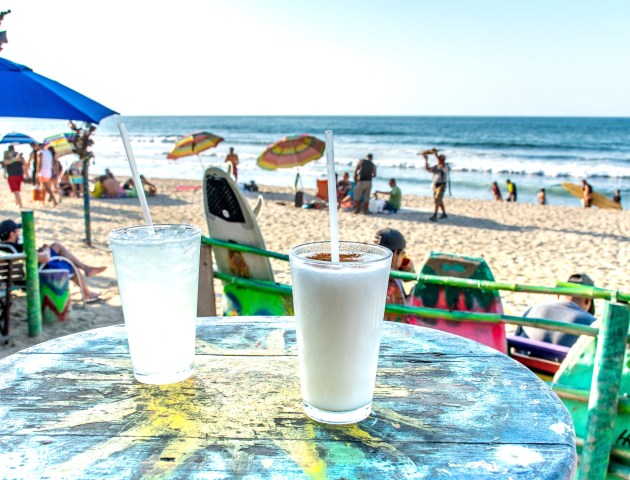
Ritchie’s Place (Front St., tel. 501/423-2031) has a good selection of fresh dishes, prepared by his wife, featuring fish empanadas. Owner Ritchie Cruz will also arrange fishing trips. Liz’s Fast Food, two streets back from the seafront, serves tasty, traditional food in a friendly, snack-stall setting: tacos, empanadas, and garnaches, as well as rice and beans. The homemade horchata (rice-based drink) is well worth trying.

Another local favorite, Estrella del Mar Restaurant and Bar, on Carlos Street, has burritos, tacos, and salbutes; lobster is available seasonally. Chez Didi offers French cuisine, freshly baked bread, and butter from a Mennonite dairy farm.

Getting to Sarteneja

Sarteneja has been linked to the rest of Belize by land for less than 40 years—roads are rugged and dusty, and during rainy season often flooded and rutted. The road from Corozal to Sarteneja was recently upgraded through a European Union funded project. Although the road remains unpaved, it was a significant improvement; still, expect a few rough spots after a heavy rain.

By Boat: Most visitors get to Sarteneja by boat from Corozal or San Pedro. Thunderbolt water taxi (www.ambergriscaye.com/thunderbolt) will stop in Sarteneja on its once-daily Corozal–San Pedro run. They depart Corozal at 7 a.m., arriving in Sarteneja 40 minutes later, before heading on to San Pedro.

The San Pedro–Corozal boat (about 90 minutes) departs at 3 p.m. from San Pedro, stopping at Sarteneja at approximately 4:30 p.m. Sarteneja is a request stop only, so purchase a ticket from Tino at Tiny’s Internet Café on Front Street in advance if you want to be sure of leaving Sarteneja by boat (US$12.50 to Corozal, US$22.50 to San Pedro).

By Air: Tropic Air (tel. 501/226-2012, U.S. tel. 800/422-3435, www.tropicair.com) has two flights a day that will stop at Sarteneja’s tiny airstrip on request. Flights leave San Pedro at 7 a.m. and 4:45 p.m., arriving in Sarteneja 10 minutes later, as part of the San Pedro–Corozal schedule. Flights will stop later in the day if there is more than one passenger requesting to be dropped off or picked up in Sarteneja.

By Bus: The bus from Belize City is often full of returning fishermen and is the most exciting way to get here. The distinctive light-blue Sarteneja buses leave Belize City daily except Sunday, from a riverside lot next to the Supreme Court Building. Four buses make the three-hour ride each day (US$5 one-way), the first at noon and the last at 5 p.m. All stop just befor ethe bridge at the Zeta Ice Factory in Orange Walk to pick up more passengers. Buses depart Sarteneja for Belize City (via Orange Walk) between 4 and 6:30 a.m.

There is a direct bus from Chetumal, via Corozal and Orange Walk, which runs every day (including Sundays), leaving Chetumal at midday or 1 p.m. (depending on whether or not Mexico is on daylight saving time). It departs for Corozal and Chetumal at 6 a.m. every morning. Buses from Corozal are intermittent, so it’s best to check with the Corozal bus station first. There is also local traffic going to Sarteneja from Orange Walk via San Estevan.

By Car: From Corozal, head south and turn left at the sign for Tony’s Inn. Follow this road, veering right until you come to a stone wall; then go left. Follow this road until you reach the first ferry across the New River, an experience in itself and free. Sometimes there are lineups on Fridays and Mondays, so anticipate a bit of a wait. After crossing, continue on the unsurfaced road until you reach a T junction.

Turn left toward Copper Bank, Cerros, and the ferry to Chunox. Upon entering Copper Bank, keep driving until you see the signs for Donna’s Place (an excellent eatery) and the Cerros ruins. If you’re not stopping to eat or visit the ruins, turn left at the ruins sign and proceed until you see the sign for the ferry crossing. After crossing, continue until you reach another T junction. Turn left for Sarteneja, or right for Chunox and the grinding drive through Little Belize back to Orange Walk.

Buy Moon Travel Guides

Loading books
loading
For more Moon travel information, sign up for our monthly e-newsletter for updates on new travel guide releases, travel tips and trip ideas for those seeking adventure or relaxation, and expert advice from our on-the-go Moon travel authors.

Find Activities>>

Moon Travel Guides make independent travel and outdoor exploration fun and accessible. With expert and adventurous travel writers delivering a mix of honest insight, first-rate strategic travel advice, insider travel tips and an essential dose of humor, Moon Travel Guides ensure that travelers have an uncommon and entirely satisfying experience. Each travel book is filled with unique trip ideas, easy-to-use maps, and detailed information on sights, restaurants, and accommodations. Moon Travel Guides not only point you in the right direction, they inspire new ideas and adventure. Whether you are seeking a relaxing beach trip to Hawaii, or an adventure travel trip to the rainforests of Costa Rica, Moon guidebooks—and Moon.com—are with you every step of the way. Founded in 1973, the Moon Travel Guides series includes Moon Handbooks, Moon Outdoors, Moon Metro, Moon Living Abroad and Moon Spotlight travel books. Moon is based in Berkeley, California and is a proud member of the Perseus Books Group.